
A poorly sized jacket poses more than just an aesthetic problem. Compression of insulation, misaligned protections on joints, restriction of mobility in riding position: the consequences of a sizing error are technical before they are visual. Choosing the right size for your jacket requires going beyond a simple reading of a size chart.
Limits of standardized sizes and multi-measurement approach
A size M or 48 does not describe a body shape. It summarizes, at best, a chest measurement. A study published in 2025 in Scientific Reports confirms that a significant portion of the subjects tested did not fit into a single category of standard size. The most reliable model was based on multiple targeted measurements (chest, waist, hips) rather than a single measurement.
We regularly observe discrepancies of two sizes between brands for the same chest measurement. This phenomenon can be explained by the choices in pattern making: some brands size based on an athletic mannequin, while others use a broader shoulder template. A Daytona73 leather jacket and a touring textile jacket do not use the same construction block.
The only reliable solution is to take at least three measurements (chest, waist, hip) and compare them to the manufacturer’s specific size guide. To choose the right jacket size, this multi-measurement approach avoids the majority of returns related to a poor fit.
Trying on in real conditions: layers, posture, and mobility
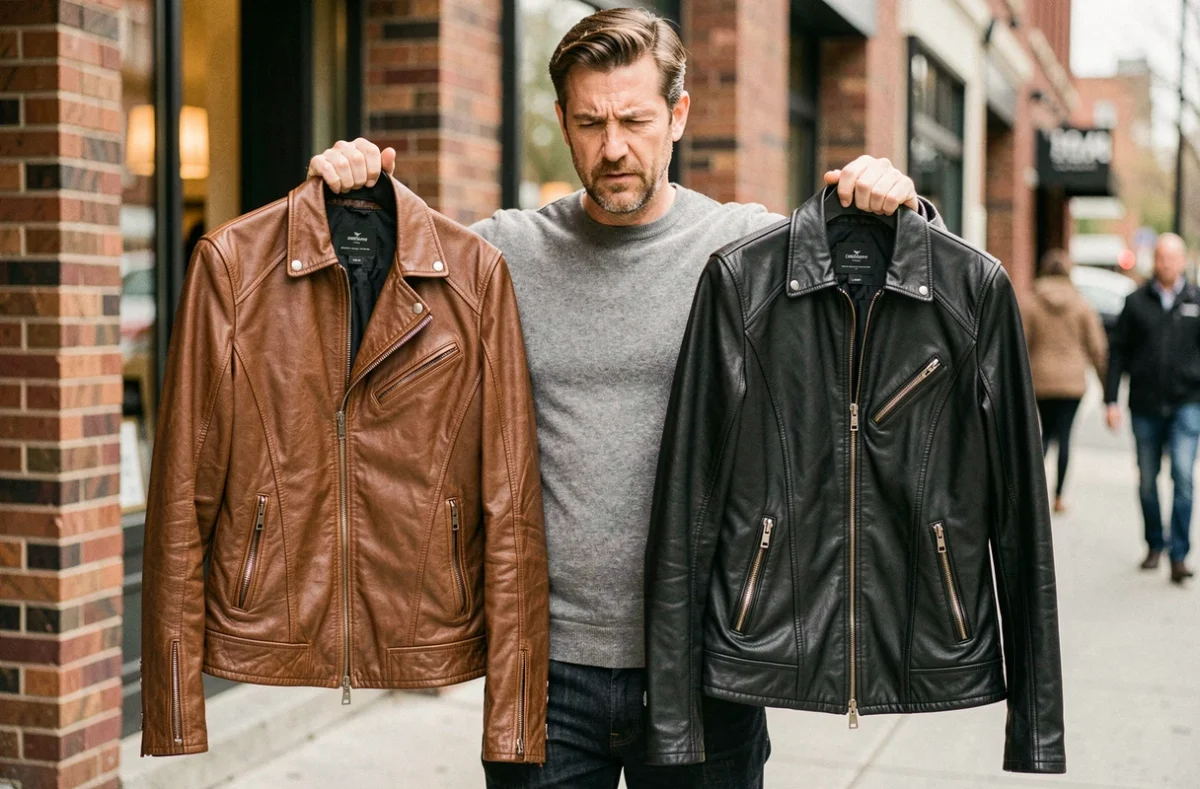
Putting on a jacket over a t-shirt in the store does not provide any useful information. Recent winter jacket guides recommend trying the jacket over the usual mid-layer. A fit that is too tight compresses the insulation and reduces thermal capacity. Conversely, a fit that is too loose allows cold air to circulate and negates the benefit of the lining.
For a city or ski jacket, we recommend simulating everyday movements while trying it on: raising arms above the head, crossing arms, sitting down. The bottom of the jacket should not rise above the waist when the arms are lifted. The shoulder seams should remain aligned with the acromion, even with arms extended forward.
Specificity of the motorcycle jacket: check the riding position
A motorcycle jacket is validated while seated, not standing. The correct size is verified in a simulated riding position: torso slightly bent, arms extended toward an imaginary handlebar. In this posture, two points need to be checked.
- The shoulder protections must remain centered on the joint without sliding toward the bicep when the arms are lifted or rotated. A shift of just a few centimeters is enough to render the armor ineffective in case of a fall.
- The elbow armor must cover the joint when the arms are bent, not when they are at the sides. A jacket that seems perfect while standing may leave the elbows exposed in a riding position.
- The back of the jacket should neither pull nor press excessively: the back protector (if integrated) should fit the spine without creating a fold that would shift the protection laterally.
This dynamic check is the only way to validate a motorcycle jacket. A correct chest measurement never guarantees the retention of protections in motion.
Chest measurement, sleeve length, and shoulder width: the three measurements that matter
The chest measurement remains the reference measurement, but it is not enough. The shoulder width (distance between the two shoulder seams, measured at the back) determines whether the jacket will fall correctly or pull at the armholes. An improperly compensated shoulder width discrepancy creates permanent discomfort in the armpits, even if the chest measurement is correct.
Sleeve length is measured with the arm slightly bent, from the top of the shoulder to the wrist. With the arm extended, the measurement is distorted: it gives a length that is too long, resulting in excess fabric at the wrist. On a motorcycle jacket, this surplus prevents gloves from properly covering the jacket-wrist junction.

For women, the hip measurement comes into play as soon as the jacket falls below the waist. A fitted model that does not take this measurement into account will restrict hip movements and ride up in the back with every bend.
Material of the jacket and size tolerance: leather, textile, mesh
The choice of material changes the sizing strategy. A full-grain leather jacket stretches with wear: we recommend taking it fitted, even slightly tight when trying it on. After a few weeks, the leather conforms to the body shape and gains flexibility without losing support.
A touring textile jacket or a nylon mesh jacket hardly stretches at all. The fitting size is the final size. Taking a textile that is too tight in the hope that it will “give” is a common mistake that leads to stressed seams and a reduced lifespan.
Jackets with waterproof membranes (Gore-Tex, Drystar) add a rigid layer that further limits the adaptability margin. For these models, it is better to allow for an extra half centimeter of ease at the chest measurement to maintain freedom of movement without compromising the waterproofing of the taped seams.
Insulation and layering: anticipating thickness
A winter jacket with a removable lining must be tried on with the lining in place. Removing the lining to “check the fit” amounts to evaluating a different jacket. Conversely, a three-season jacket designed to accommodate an independent thermal underlayer requires a size that incorporates this extra thickness from the outset.
The rule is simple: try on with the layers actually worn, never in minimal configuration.
The sizing of a jacket relies on concrete checks, not on a label. Three body measurements compared to the manufacturer’s guide, a fitting in real conditions with the right layers, and a dynamic validation in the usage posture. These steps take a few minutes and prevent a purchase that will end up at the back of the closet.