
Monday morning, 7:12 a.m. The oldest child’s sports bag is nowhere to be found, the little one is looking for her poetry notebook, and nobody has taken the bread out of the freezer. The parent keeping everything on track isn’t the one doing the most visible tasks; it’s the one who anticipated all three problems at once without anyone noticing.
Family life doesn’t get complicated because people aren’t trying hard enough, but because the work of anticipating and coordinating often falls to just one person. In 2024, 59% of women surveyed said they carried most of the mental load at home, compared with 9% of men, according to the Drees opinion barometer cited by Insee. The gap isn’t about who does the housework itself, but about who thinks of what needs doing, when, and how.
Invisible work at home: making the unseen visible
Anticipating a doctor’s appointment, checking there are enough diapers for the weekend, following up on summer camp registration: these small tasks don’t appear on any shared list. They’re called invisible work because they have no clear beginning or end. They fill the gaps in the day, often during a commute or lunch break.
A 2024 analysis by SDES and Insee also shows that women’s commutes are more likely than men’s to include an additional stop, such as grocery shopping or picking up a child. Family organization therefore extends beyond the home: it also happens along the route between school, the supermarket, and the office.
To break out of this pattern, start with a simple exercise: for one week, write down every mental task you take care of in a notebook or app (remembering to, checking that, reminding someone to). The total is almost always surprising, and the online resource https://www.la-family.net offers practical ideas for discussing these issues as a family. The goal isn’t to keep a permanent log, but to make invisible work concrete enough to share it out.
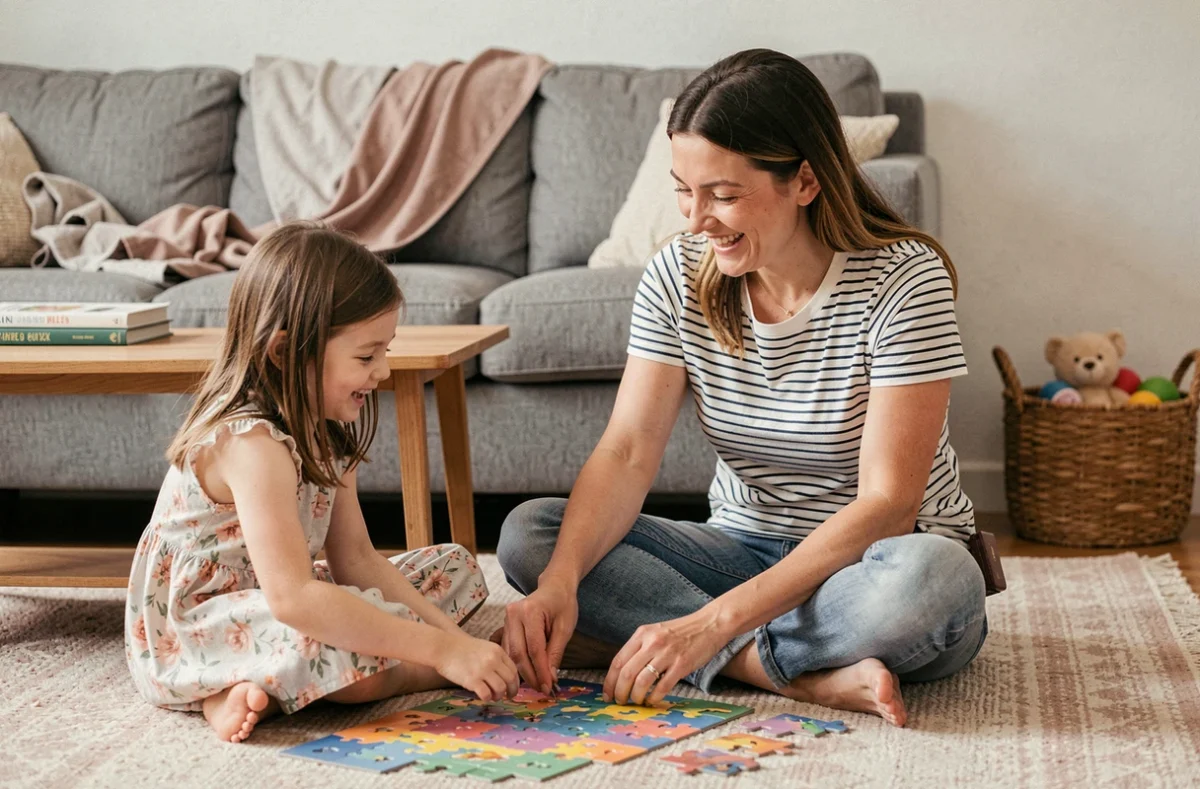
Sharing family responsibilities: more than just a list on the fridge
Putting a chore chart up in the kitchen is a good start. The problem is that the person who creates the chart, updates it, and reminds everyone else to check it is still the same person. The workload gets redistributed, but the coordination burden doesn’t.
Assign full responsibilities, not individual tasks
Instead of dividing up tasks one by one (taking out the trash, vacuuming), assign areas of responsibility. One parent takes full responsibility for the week’s meals, from planning the menu to tidying the fridge. The other handles school-related matters, including signing school diaries and registering for field trips.
A full area of responsibility includes planning, doing, and following up. The person in charge shouldn’t need reminders about what needs to be done; they own the whole process. Children can also take on age-appropriate responsibilities, such as keeping track of the family pet’s food supply or packing their sports bag the night before practice.
The ten-minute weekly family meeting
Set aside a regular time each week (Sunday evening works well) for everyone to share their commitments for the days ahead. Cover three questions:
- What appointments or deadlines are coming up this week, and who is responsible for each one from start to finish?
- What didn’t go well last week, and what specific change can we try?
- What enjoyable time together will we protect in the calendar (a meal, an outing, a game)?
Ten minutes is enough if everyone takes a structured turn. The goal isn’t to negotiate every task, but to sync schedules and redistribute unexpected demands before they pile up.
Family routines and time together: protect what matters
Organization only makes sense if it frees up time to spend together. A schedule optimized down to the minute, with no free time at all, misses the point. Instead, aim for a daily routine where transitions (mornings, after school, bedtime) run smoothly, leaving the rest of the time genuinely free.
Build routines around transitions, not the whole day
Most friction happens at three points: leaving in the morning, getting home, and going to bed. Focusing on these three windows has a greater impact than planning the entire day. For example, getting everything ready the night before (laying out clothes, packing bags, setting the breakfast table) eliminates most morning emergencies.
After school, a short ritual (having a snack in the same place, followed by ten minutes of open conversation before homework) helps children transition from group settings to home. The most sustainable routines have no more than three steps, making them easy to remember even for a five-year-old.

Screens and family life: agree on boundaries together
The report submitted in April 2024 by the expert commission on children and screens brought the question of household rules back into focus. Imposing rules unilaterally often leads to resistance. You’ll get better results by involving children in setting the rules:
- Agree together on screen-free times (meals, car rides, the last half hour before bed)
- Set a weekly allowance rather than enforcing rigid daily limits, leaving more flexibility on weekends
- Adults should follow the same rules during family time, or risk losing all credibility
Rules created together last longer than imposed bans. They also teach children to take part in household decisions, which ties directly into sharing responsibilities.
Sustainable family organization: accept that the system will change
What works with a three-year-old may no longer work with a middle schooler. Areas of responsibility, transition routines, and screen rules need to be reviewed regularly. The weekly meeting helps with that, too: it gives you a chance to spot what isn’t working before frustration sets in.
A well-organized home isn’t one where nothing ever changes; it’s one that knows how to adjust its rules. The goal of everyday family life isn’t to find the perfect system, but to make sure no one is solely responsible for keeping everything running. When everyone in the household knows what they’re responsible for and why, the time you free up isn’t time reclaimed from chaos—it’s time you choose to spend together.