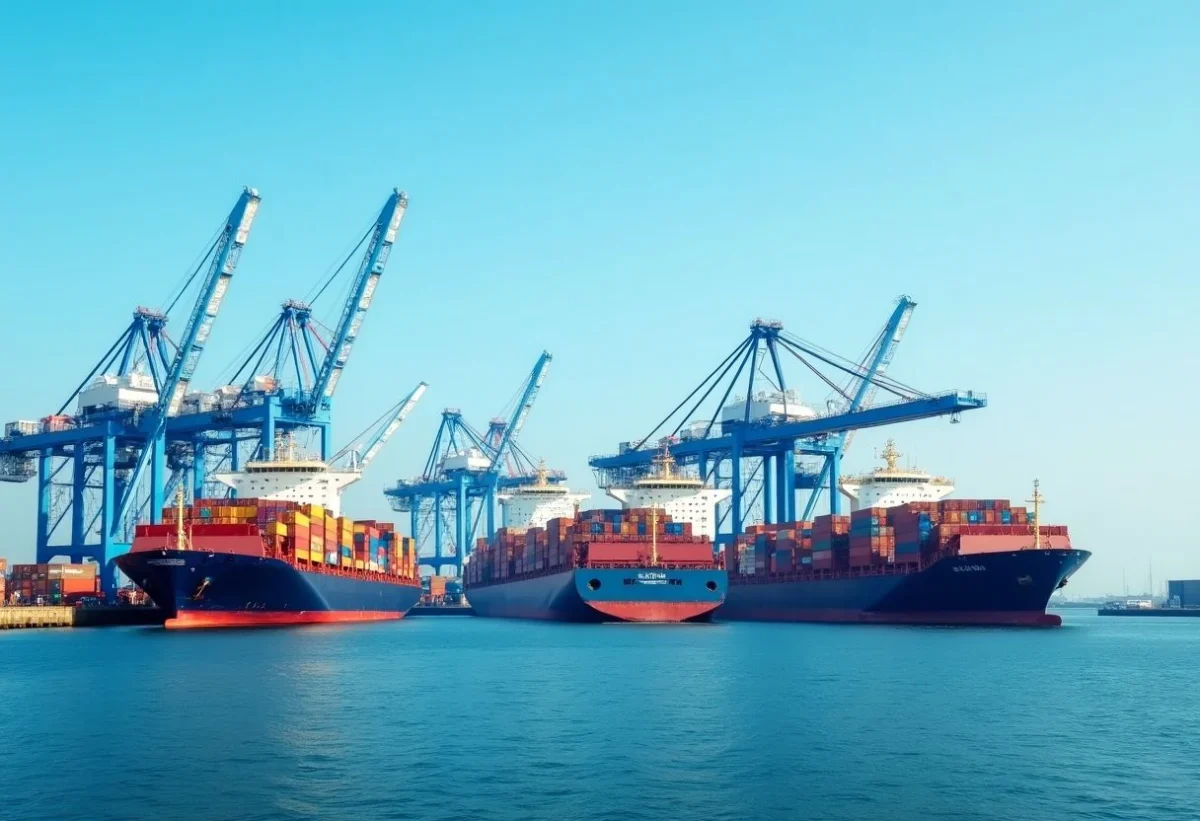
International transport is an essential lever of the global economy. It connects continents, cultures, and markets, thus uniting humanity in a complex network of connections. This vast field encompasses maritime, air, road, and rail transport, each playing a fundamental role in economic dynamism. The importance of this sector, combined with its logistical, political, and environmental challenges, makes it a fascinating subject of study with unparalleled complexity. What are the stakes and perspectives that dominate this crucial field for our society?
Transport modes: a diversity adapted to needs
Each mode of transport plays a decisive role in the global economy, each offering specific advantages tailored to particular needs.
- Maritime transport: With nearly 90% of goods traded internationally passing by sea, this mode is the pillar of global commerce. Container ships allow for the transportation of immense volumes across the world, thus optimizing costs and reducing the carbon footprint per ton transported.
- Air transport: Although it represents a smaller fraction of the volume of goods, air transport is essential for high-value or perishable goods. Its unmatched speed makes it indispensable for supply chains requiring high responsiveness.
- Road transport: Fundamental for the last mile, road transport ensures the final delivery of goods, connecting ports and airports to end recipients. Trucks and other vehicles are key to local and regional distribution.
- Rail transport: Less polluting than road and faster than sea, trains are an ideal intermediate option for many transnational routes, especially in Eurasia.
The logistical challenges of international transport
The logistics of international transport is complex and must overcome a multitude of obstacles to ensure the smooth conduct of trade exchanges.
Customs barriers and regulations vary from country to country, requiring specialized expertise to ensure that goods arrive safely. Logistics must also adapt to demand fluctuations, often unpredictable, while managing risks related to delays and potential damage during transit.
Technology and innovation are becoming indispensable allies to improve efficiency, with supply chain management systems and real-time tracking tools transforming the way industry players operate.
Environment and sustainability: an imperative for the future
In the face of growing concerns about climate change, the international transport sector finds itself at a crucial turning point.
- Emission reduction: Companies are investing in cleaner technologies and alternative fuels to reduce their environmental impact.
- Route optimization: Thanks to artificial intelligence and big data, routes are optimized to reduce energy consumption.
- Regulatory push: Governments are imposing increasingly strict standards to encourage transport players to adopt sustainable practices.
Future perspectives and innovations
The future of international transport promises to be exciting, with technological innovations at the heart of this evolution.
Advancements in autonomous vehicles and drones are already transforming logistics. Hyperloop and cutting-edge propulsion technologies could revolutionize the speed and efficiency of travel and exchanges.
Moreover, the growing digitization and integration of the Internet of Things (IoT) into logistics management systems promise to further enhance the fluidity and transparency of operations on a global scale.