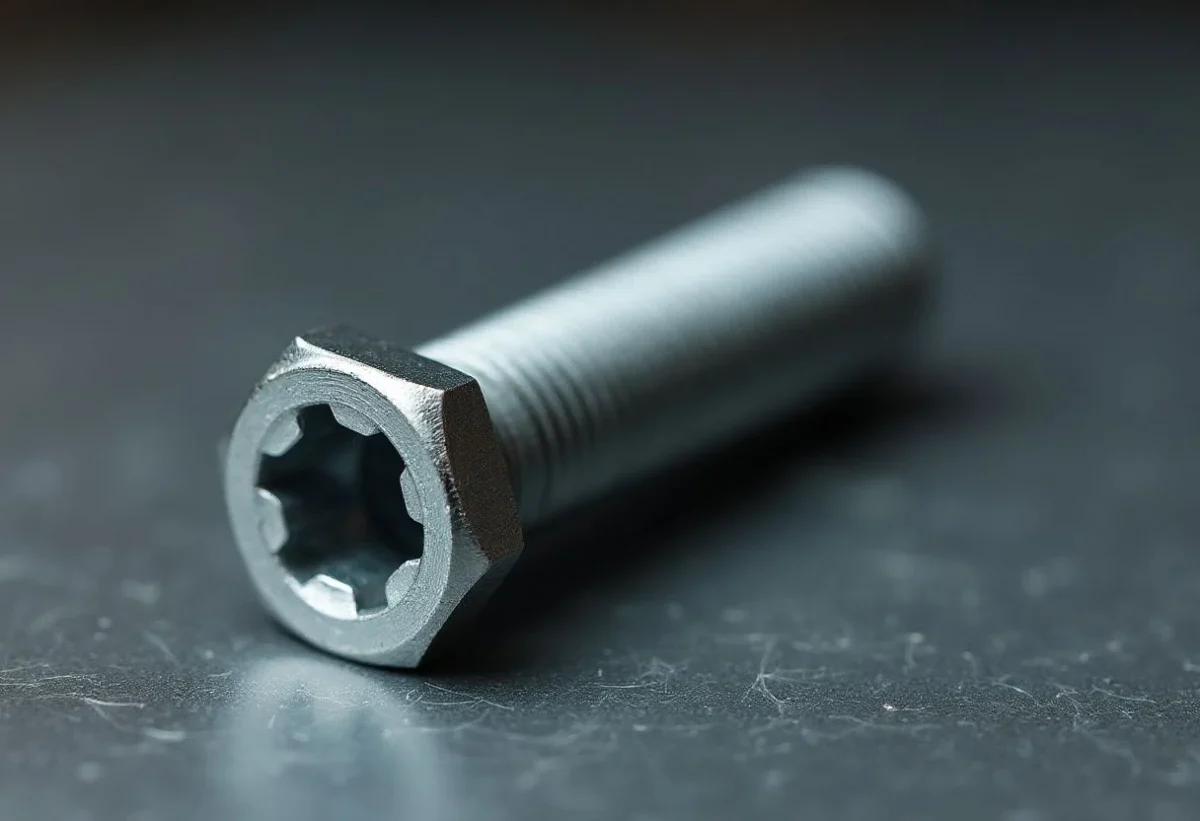
CHC screws, or hexagon socket screws, hold a central place in the world of mechanical and industrial fasteners. Known for their efficiency and versatility, they are widely used in various applications ranging from simple home repairs to large industrial installations. Their unique design, which includes a hollow hexagonal head, allows for easy installation with Allen keys, thus reducing the need for bulky tools and facilitating access in tight spaces. It is notably this feature that has significantly contributed to their popularity and adoption in many fields. Although often overlooked by the general public, they are an essential element for ensuring the robustness and durability of the structures they hold together.
Origin and evolution of CHC screws
CHC screws, recognized for their ingenious design, have not always been as popular as they are today. Their history reflects an interesting evolution towards increased efficiency in the field of fasteners.
Initially, these screws were developed to meet a growing need for more ergonomic fastening solutions. During the early 20th century, manufacturers were looking for more effective ways to assemble components with precision, without compromising ease of assembly. Traditional flat or cross-head screws had limitations, particularly in terms of accessibility and maintaining torque.
- Invention and popularization: The first hexagonal head screws emerged in the 1930s. Patents filed marked the beginning of their adoption in the mechanical and aerospace industries.
- Industrial adoption: Gradually, mechanical manufacturing plants integrated these screws into their processes, thanks to their ability to provide high torque without damaging the screw head.
- Technological evolution: With the rise of modern technologies, the design of screws has evolved, incorporating increasingly durable materials such as stainless steel and titanium alloys, thereby increasing their durability.
Technical characteristics of CHC screws
CHC screws stand out due to several technical characteristics that make them unique. These attributes allow them to adapt to many specific uses.
The standardized dimensions of CHC screws facilitate their integration into systems where precision is essential. They are available in a wide range of sizes and lengths, ensuring compatibility with a variety of projects. The shape of the hollow hexagonal head is designed to maximize contact with the tool, thereby minimizing the risk of slipping during tightening.
The materials used for manufacturing CHC screws often include stainless steel, known for its resistance to corrosion and temperature variations. Other alloys may be used for specific applications requiring increased resistance to extreme environmental conditions.
For more information on this topic, you can consult this detailed article that explores the technical specifications in depth.
Practical uses and advantages of CHC screws
CHC screws are not just robust; they also offer several practical advantages in various applications.
In the automotive industry, they are often used to assemble critical components, ensuring a strong and reliable connection. They are also valued in the field of aerospace where every gram counts, as their lightweight does not compromise their holding capacity.
Moreover, in the context of home DIY projects, CHC screws are appreciated for their ease of use and adaptability to common tools like Allen keys. They allow for quick and efficient repairs, even for those without extensive technical training. Finally, their ease of maintenance is a significant advantage; the hexagonal design allows for simple disassembly without damaging the screw’s imprint, which extends their lifespan.
Tips for choosing and using CHC screws
Choosing the right CHC screw may seem daunting given the variety available on the market. However, a few practical tips can guide users towards a relevant selection.
- Identify the specific needs of your project. This includes understanding the loads to be supported, environmental conditions, and materials to be assembled.
- Select the material of the screw based on the usage environment. For damp or corrosion-exposed areas, stainless steel screws are recommended.
- Check compatibility with available tools. Ensure you have Allen keys of the appropriate size to easily install and remove the screws.
- Finally, consider the length and diameter of the screw to ensure optimal fastening without compromising the structural integrity of the assembled components.
CHC screws, although seemingly simple, play a fundamental role in many aspects of our daily lives. Their ingenious design and the evolution they have undergone over the decades make them a preferred choice in many sectors. Their ability to meet varied requirements, both in terms of robustness and ease of use, underscores their importance in the field of fasteners. Whether in complex industrial applications or for home repairs, they remain a significant ally in ensuring the stability and durability of assemblies.
“`