
140,473. This figure marks Tesla’s reality at the end of 2023, recorded in black and white in reports filed with financial authorities. A statistical slap: down from 2022, this total bears the mark of the wave of job cuts initiated at the beginning of spring 2024.
After years of hiring at a rapid pace, contraction hits. Surprising for those who have only followed the firm’s rise, yet logical, the pace of the automotive sector demands quick adjustments. Tesla is tightening its belt, under pressure from the rise of electric vehicles and the relentless automation of its factories.
Where is Tesla in 2024? A look at the company that is shaking up the automotive industry
The global electric vehicle market is more active than ever, and Tesla, the provocative pioneer, is refining its choices. 2024 becomes a pivotal year: unbridled growth gives way to rigorous management. At the beginning of spring, the current workforce at Tesla falls to around 121,000 employees. A significant decrease, indicating that management is now tightening spending and operating the production lines with even more automation in Berlin, Shanghai, or Austin.
However, industrial output does not weaken: every year, millions of electric cars roll off the production line. Tesla is doubling down in the European continent, but faces supply chain tensions regarding raw materials for its lithium-ion batteries. The challenges are concrete: managing the lifecycle of vehicles, limiting the carbon footprint, meeting specific demands from the Chinese public, or adjusting to the expectations of the European market.
Behind the image of robotic assembly lines, Tesla aims to be a flagship of a greener economy. But massive industrialization fuels tensions on the social front, reviving the debate about the reality promised by the ecological transition. Between uncertainty and pride, employees navigate a balancing act, members of a company that pushes the boundaries of traditional automotive.
How many employees work at Tesla today and why does this number fluctuate so much?
In spring 2024, the number of employees at Tesla approaches 121,000 worldwide. After growing relentlessly for ten years, the company is entering a period of tightening. The needs remain colossal in production of electric cars, but increasingly sophisticated automation in the Gigafactories is redistributing positions and specialties, particularly in Berlin and Austin.
Several factors explain this major reshuffling of Tesla’s workforce:
- Industrial adaptation to anticipate the launch of new electric models.
- Constant pursuit of profitability, cost reduction, each gigafactory is on the lookout for any unnecessary expense.
- Shifts in the automotive industry: moving from a mass model to an ultra-responsive management style, centered around data and software innovation.
The landscape of jobs at Tesla reflects this rapid shift towards electric mobility and the ambition to drastically reduce carbon emissions. In Berlin, hiring continues to strengthen the European response, while elsewhere, management adjusts according to market developments or new strategic priorities. The workforce then becomes, almost every quarter, the thermometer of an industry in full adjustment: economic demands, ecological imperatives, and social balances collide.
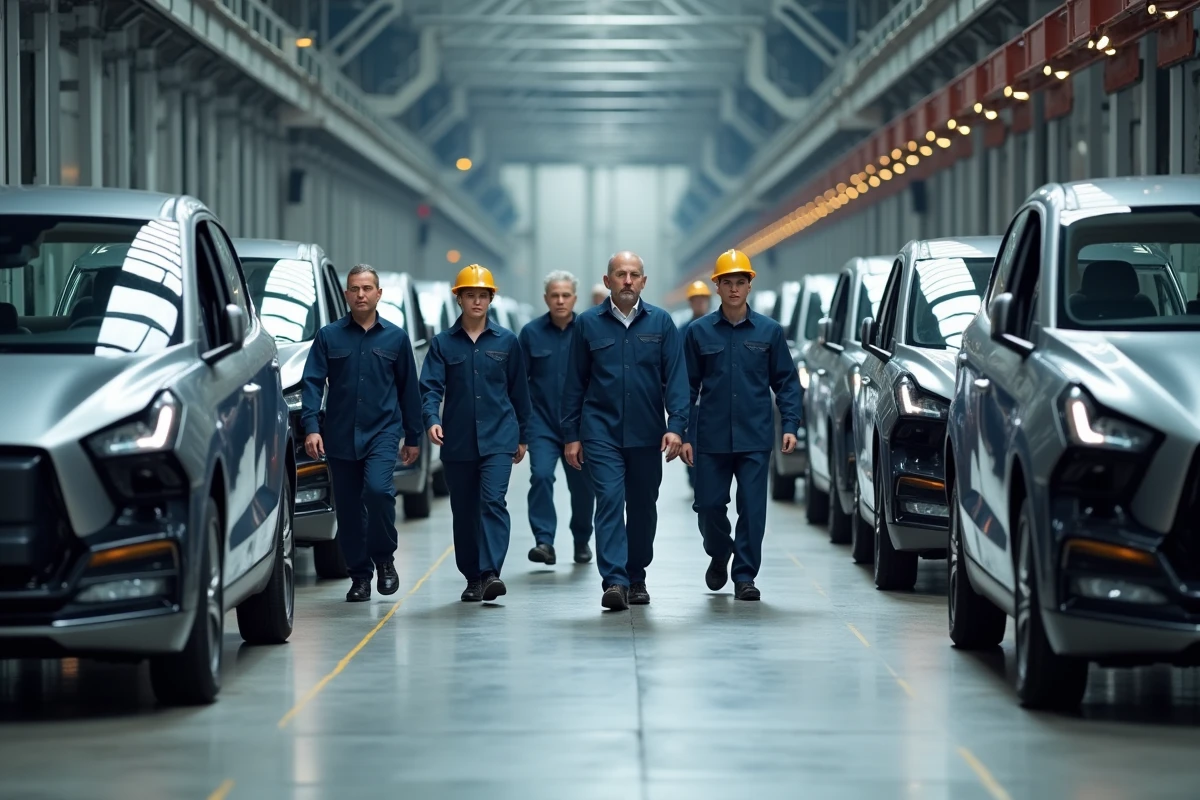
Towards 2035: what are the prospects for employment and electric vehicles in a rapidly changing sector?
The electric vehicle revolution continues to reshape the very face of the industry. Looking towards 2035: we are talking about several million electric vehicles produced each year, a disruption that redistributes the geographical cards of the sector. With the rise of renewable energies and increased efforts against greenhouse gases, the automotive sector is accelerating its transformation at a rapid pace.
The growing weight of lithium-ion batteries, competition over raw material extraction, all contribute to reinventing value chains. The stakes are clear: to advance the autonomy of cars without increasing their carbon footprint over their lifecycle. Training and professional retraining become essential pathways. New jobs in battery manufacturing, lifecycle management, or driving energy transition are shaping multiple career trajectories.
In France and across the rest of Europe, efforts aim to build local supply chains for battery production and a more conscientious management of raw materials. The proliferation of plug-in hybrid vehicles and the gradual phasing out of the internal combustion engine show how quickly adaptation is occurring, both under climate pressure and in response to new social expectations. In light of this acceleration, one truth stands out: tomorrow, the electric car will no longer be just an object, but a symbol of a new social balance, a political challenge, and a profound transformation of the world of work and territories.