
A pain that appears under the left ribs often raises the same question: is it the heart or the stomach? The location alone does not allow for a definitive answer. Medical alert recommendations emphasize associated symptoms (tightness, shortness of breath, sweating, radiation to the arm or jaw) rather than just the site of the pain. Comparing the precise characteristics of each type of pain remains the most reliable way to guide oneself before any consultation.
Cardiac or digestive pain under the ribs: a comparative symptom table
The signs accompanying the pain provide more clues than its exact location. The table below contrasts the typical characteristics of heart-related pain with those of gastric or digestive pain.
Related reading : How to take advantage of the SNCF Vermeil card benefits?
| Criterion | Cardiac origin (coronary syndrome) | Digestive origin (gastritis, reflux, ulcer) |
|---|---|---|
| Type of pain | Tightness, squeezing, feeling of pressure | Burning, cramping, twisting |
| Radiation | Left arm, jaw, back, sometimes both arms | Reflux to the esophagus, sometimes back |
| Common trigger | Physical exertion, intense stress | Meals, alcohol, anti-inflammatories |
| Duration | Persistent or increasing, does not subside with rest | Variable, often relieved by an antacid |
| Associated signs | Cold sweats, shortness of breath, nausea, malaise | Bloating, belching, acidity |
| Reproducible by pressure | No | Rarely (except for wall pain) |
This table describes classic presentations. A pain under the left ribs can also stem from a thoracic wall problem or an intercostal nerve issue, especially when it is reproducible by pressure or movement.

See also : How to create a payroll company?
Persistent chest pain: the alert criterion that takes precedence over location
The most common mistake is to reassure oneself because the pain is “lower” or “under the ribs” rather than in the center of the chest. In practice, persistence and intensity matter more than location. An unusual chest pain that lasts, intensifies, or is accompanied by malaise warrants rapid evaluation, regardless of its exact location.
Signs that require a call to 15 (emergency services)
- Chest pain that feels like a vice that does not subside after a few minutes of rest, especially if it radiates to the left arm or jaw
- Sudden shortness of breath associated with cold sweats or marked pallor
- Sensation of general malaise with nausea and increased heart rate, even in the absence of very strong pain
The presence of cardiovascular risk factors (high blood pressure, diabetes, smoking, family history) lowers the threshold at which left-sided pain warrants urgent medical advice.
The tests vary depending on the hypothesis
In the case of suspected cardiac issues, an electrocardiogram (ECG) and a troponin test quickly guide the diagnosis. However, if the digestive hypothesis predominates, the doctor favors a gastric fibroscopy or abdominal ultrasound. The ECG remains the first-line test whenever there is persistent cardiac doubt, as it can rule out a heart attack in a matter of minutes.
Left subcostal pain of parietal origin: the avenue that patients often overlook
A third common cause often goes unnoticed in the “heart or stomach” reasoning: pain from the thoracic wall. Costochondritis, irritation of an intercostal nerve, muscle contraction – these conditions affect the structures located between the ribs and reproduce pain similar to that of an internal organ.
Local pressure-reproducible pain points to the thoracic wall. Pressing on the painful area and reproducing exactly the same sensation is a strong indicator. Cardiac pain does not reproduce in this way, nor does gastric pain (except for epigastric pain that may sometimes be sensitive to deep palpation).
Parietal pain often increases with certain movements: trunk rotation, deep inhalation, coughing, or sneezing. It is therefore distinguished by its mechanical nature. This practical point of differentiation prevents unnecessary emergency visits for a benign cause while reminding that any doubt should always be clarified by a professional.
Gastritis, reflux, and ulcer: understanding digestive pain under the ribs
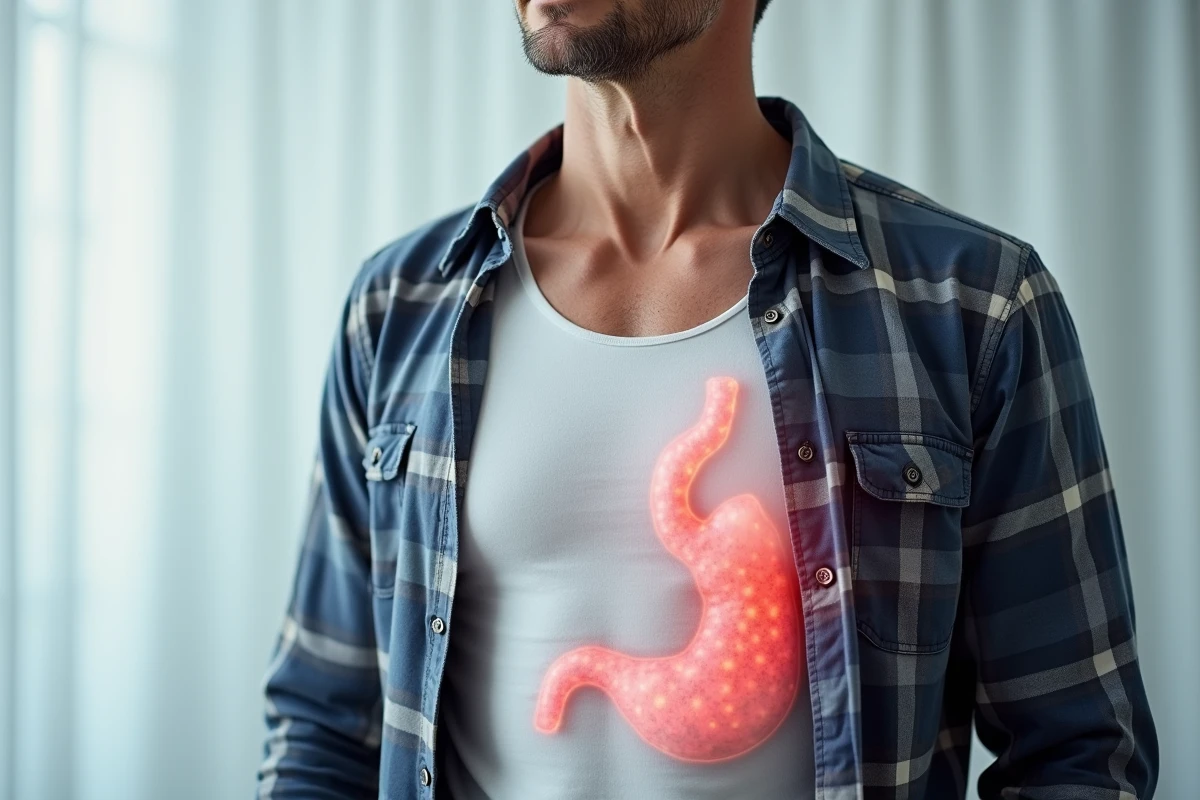
The left subcostal region houses the upper part of the stomach (gastric fundus) and the tail of the pancreas. Gastritis or gastroesophageal reflux typically causes an ascending burning sensation, worsened after meals or when lying down.
A gastric ulcer produces pain that is rhythmic with meals, often relieved by eating and then reactivated a few hours later. This food-related rhythm is a distinctive marker compared to cardiac pain, which does not vary with food intake.
One point deserves attention: nausea accompanies both a heart attack and acute gastritis. Relying solely on the presence of nausea to conclude a digestive problem is a reasoning error. It is the combination of signs (positional burning, relief from antacids, absence of radiation to the arm) that points to the stomach.
When to consult for left-sided pain under the ribs
Three situations deserve to be distinguished. The first: the pain is intense, sudden, and accompanied by cardiac signs (tightness, sweating, radiation). Call 15 without delay.
The second: the pain recurs regularly over several days without urgent signs. A consultation with the primary care physician in the following days allows for guiding examinations. The third: the pain is clearly related to a movement or pressure on a specific area, and it subsides with rest or simple analgesics. A medical opinion remains relevant if it persists beyond a few days.
Self-diagnosis remains insufficient to rule out a cardiac cause. Even when the presentation strongly suggests a digestive or parietal origin, only a clinical examination, possibly combined with an ECG or blood test, can definitively rule out a coronary issue. The cost of an unnecessary visit to the emergency room will always be less than that of an undiagnosed heart attack.